New teeth. Made to look natural.
Implants and full arches that look, feel and work like natural teeth.

All your dental care, in one place
Implants and full-arch replacement are the work Dr. Moradian does most. Crowns, root canals, extractions and cosmetic work are here too, so one practice covers the whole mouth rather than sending you on.
Dental Implants
A titanium post that replaces the root, and a crown on top of it that replaces the tooth.Dental Bridges
A filler tooth carried by crowns on the teeth either side of the gap.Dentures
A removable set of teeth for a whole arch, or for the run of teeth that is missing.Full-arch replacement
A fixed set of teeth carried on four to six implants per arch, planned on the scan before surgery.Dental Crown
A cap over the whole tooth, for when the surface is a problem but the root is healthy.Cosmetic Dentistry
Veneers, inlays, bonding and whitening, chosen for the specific thing you want changed.

Why patients drive across Tampa Bay for this
The scan comes first
A cone beam CT scan shows a 3D image of your jaw. Where the bone can carry an implant, and where it cannot, is settled before surgery is scheduled.
More than how it looks
A missing root leaves the bone under it with nothing to do, and it shrinks. An implant gives that bone a job again, which holds the shape of your face and protects the teeth either side of the gap.
Options in plain language
Every option is set against what you want, what your bite needs and what you can spend, and explained before anything is agreed.
Advanced dental technology
The technology used on an implant case, and what each means for you.
- Digital imaging
Digital X-rays
Detailed, and right away.
- Diagnostic support
AI-assisted diagnosis
A second set of eyes.
- Gentle treatment
Laser dentistry
A gentler touch.
Done right, step by step
Four stages from the first scan to the finished teeth, and the one tool each of them turns on.
Scan
The jaw is imaged before anything is scheduled, so the plan is built on your anatomy rather than an average one.
- Cone beam CT, a 3D image of your jaw’s anatomy
Plan
Implant positions, the number of them, and what sits on top are decided on that image, with the gums treated first if they need it.
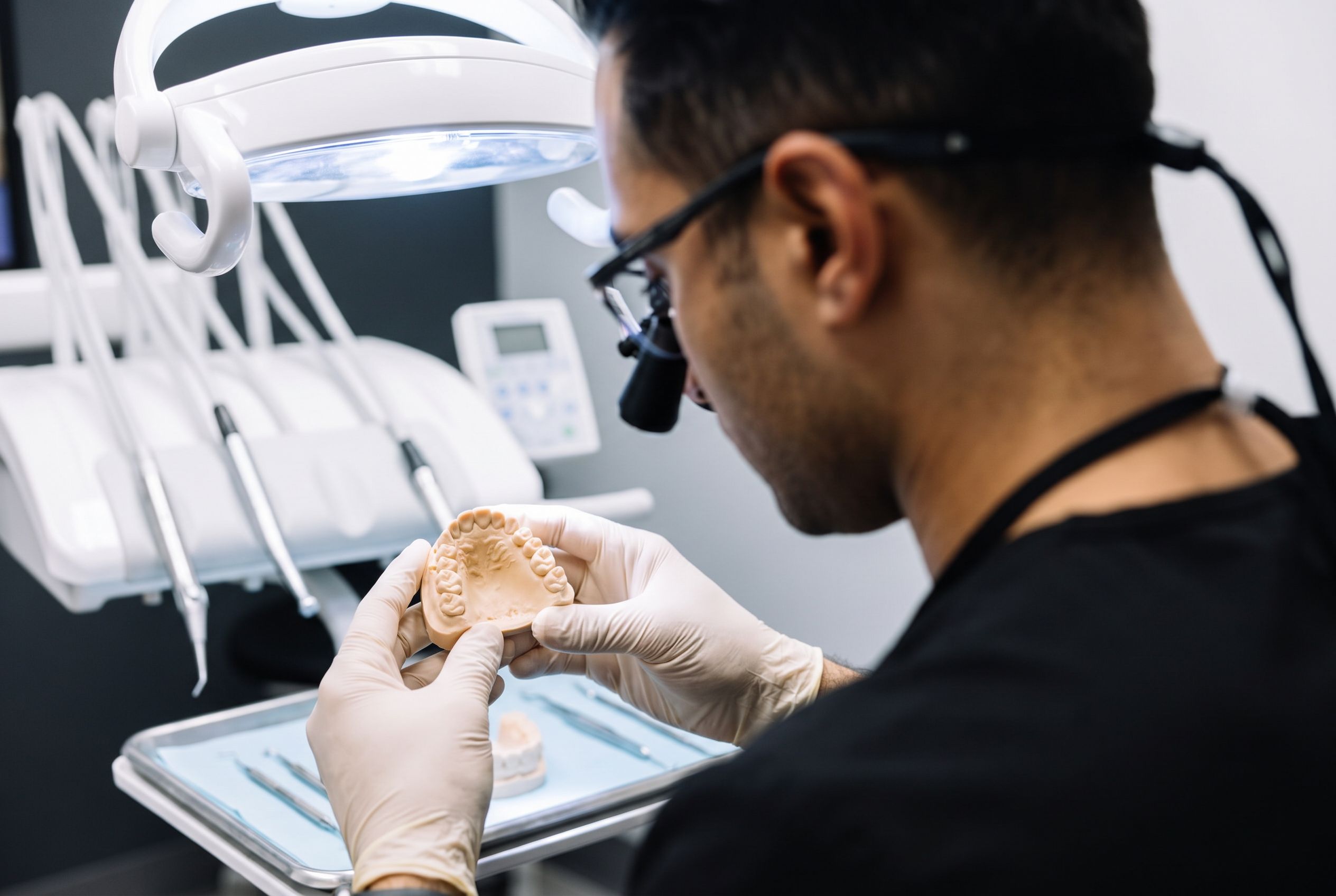
- A model of the arch, checked in the hand before the mouth
Placement
Titanium posts go into the bone where the plan put them, and the bone grows around them over the months that follow.
- Local anesthetic, given before any work starts
Fitted teeth
A crown on a single implant, or a fixed arch on four to six, made to the shape and shade the plan set.
- A lab brief naming exactly what the restoration should look like
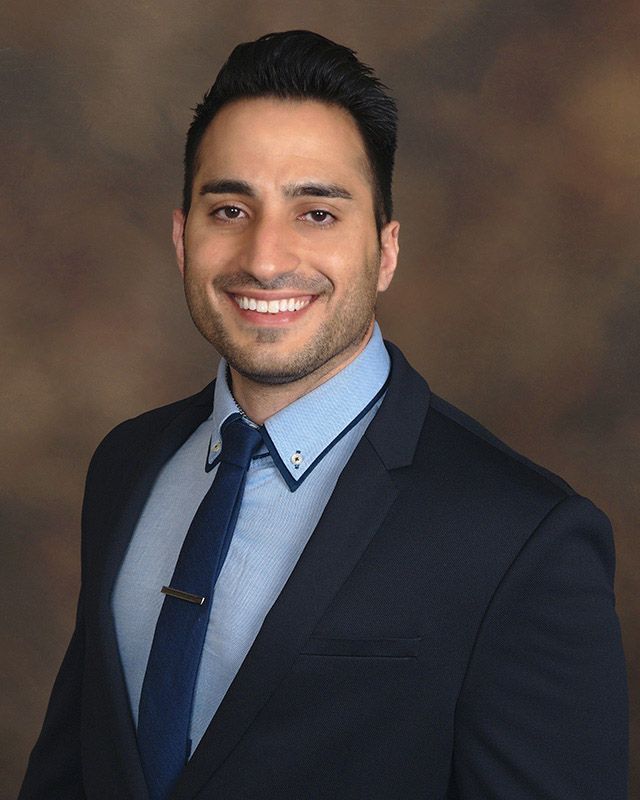
Dr. Amir Moradian, DMD
Implant and restorative dentist
Dr. Amir Moradian is an implant and restorative dentist in Tampa. He graduated from LECOM School of Dental Medicine and has worked in dentistry for 17 years, the last four of them here in Tampa.
His work is implants, full-arch rehabilitation, full-mouth extractions and the prosthetics that follow. When he is not in the office you will find him traveling, on the golf course, staying active, or spending time with the people close to him.
We treat the person first and the patient second. Tell us what matters most, whether that is chewing on both sides again or a smile you stop hiding, and you get a plain account of what each option does, how long it lasts, and what your bite needs from it.
Questions
Why does an implant plan start with a scan?
A cone beam CT scan is a type of computerized tomography that shows a 3D image of your jaw’s anatomy. It shows where the bone can hold a fixture and where it cannot, which makes placement more predictable and settles the plan before any surgery is scheduled.
How many implants hold a full arch of teeth?
A fixed arch is carried on four to six implants rather than one implant per tooth. How many, and where each one goes, is decided on the scan and on the bone that is actually there.
Can a damaged tooth be saved instead of pulled?
Often, yes. A root canal removes the inflamed nerve from inside a tooth so the tooth itself can stay, and a crown caps the whole tooth when the surface is the problem but the root is healthy. Extraction is the last resort, for a tooth that cannot be saved, and it comes with a plan for what replaces it.
Where does Dr. Moradian see patients?
Tampa Bay. Patients come from Tampa and from across Pinellas County, including Clearwater, Largo, Seminole, St. Petersburg and the beach towns.